


The concept of CorporateSocial Responsibility (CSR) has gained significant traction. But whatexactly does it mean for a company to be socially responsible? How canbusinesses effectively implement CSR practices that not only benefit societybut also enhance their reputation and profitability? This blog will explore thedefinition of corporate social responsibility, its benefits, and best practicesfor implementation.
Understanding Corporate Social Responsibility
Corporate Social Responsibility refersto a business model where companies integrate social and environmental concernsinto their operations. This approach goes beyond mere compliance with legalrequirements, it involves a commitment to ethical behavior, sustainabledevelopment, and community engagement.
CSR can manifest in various forms,including:
- Environmental initiatives: Companies adopt sustainable practices to minimize their ecological footprint.
- Philanthropy: Businesses engage in charitable giving or support community projects.
- Ethical labor practices: Ensuring fair treatment and working conditions for employees.
- Community engagement: Actively participating in community development through volunteerism or partnerships with local organizations.
Benefits of Corporate Social Responsibility
Implementing effective CSR strategiescan yield numerous benefits for companies, including:
- Enhanced brand reputation: Companies recognized for their social responsibility often enjoy a positive public image, which can lead to increased customer loyalty.
- Attracting talent: Employees are increasingly seeking workplaces that reflect their values. A strong CSR program can help attract and retain top talent.
- Risk management: Companies that prioritize CSR are better equipped to manage risks related to social and environmental issues.
- Increased profitability: Studies have shown that socially responsible companies often outperform their less responsible counterparts financially.
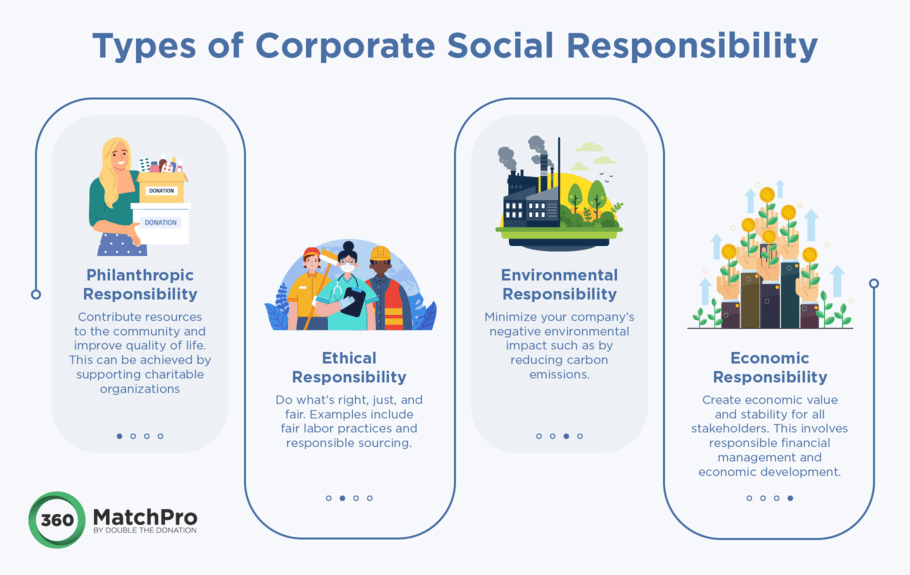
Source: 360matchpro.com
Best Practices for Implementing CSR
To effectively integrate corporatesocial responsibility into business operations, companies should consider thefollowing best practices:
1. Align CSR with business goals
CSR initiatives should align with theoverall mission and values of the organization. This ensures that efforts arenot only meaningful but also sustainable in the long term.
2. Engage stakeholders
Involve employees, customers,suppliers, and community members in the development of CSR strategies. Thiscollaborative approach fosters a sense of ownership and accountability.
3. Measure impact
Establish metrics to assess theeffectiveness of CSR initiatives. Regularly evaluate progress and makeadjustments as needed to maximize impact.
4. Communicate transparently
Maintain open communication about CSRefforts with stakeholders. Transparency builds trust and demonstrates a genuinecommitment to social responsibility.
5. Foster a culture of responsibility
Encourage employees at all levels toembrace CSR values. Training programs and workshops can help instill a sense ofpurpose and responsibility within the workforce.
Examples of Successful Corporate Social Responsibility
Several companies have successfullyimplemented CSR initiatives that set benchmarks for others:
- Patagonia: Known for its environmental activism, Patagonia donates 1% of sales to environmental causes and encourages customers to buy used products through its Worn Wear program.
- Ben & Jerry's: This ice cream company is committed to social justice issues, including climate change and racial equity, integrating these values into its business practices.
- Starbucks: The coffee giant has made significant investments in ethical sourcing, community development, and employee welfare, establishing itself as a leader in corporate responsibility.
Conclusion
Corporate Social Responsibility is notjust a trend, it is an essential aspect of modern business strategy. Byembracing CSR, companies can create positive impacts on society while enhancingtheir own sustainability and profitability. As consumers increasingly demandaccountability from businesses, those that prioritize corporate socialresponsibility will likely thrive in the competitive landscape.
Byimplementing best practices and learning from successful examples,organizations can effectively navigate the complexities of CSR and contributemeaningfully to their communities while achieving their business objectives.