


Saudi Arabia’s job market isundergoing a transformative shift, with seasonal hiring emerging as a criticaldriver of economic flexibility. For businesses, the challenge lies in aligningworkforce demands with fluctuating needs especially during peak seasons likeHajj, Ramadan, or national celebrations.
Companies often grapple withlast-minute talent shortages, regulatory complexities, and balancing temporaryhires with long-term productivity. Workers, meanwhile, face competition forroles that require specialized skills or geographic mobility.
This article explores how SaudiArabia is addressing these pain points through innovative programs, strategicpartnerships, and regulatory frameworks offering actionable insights forbusinesses and job seekers navigating this dynamic landscape.
Seasonal Hiring in Saudi Arabia: Current Trends and Economic Impact
Saudi Arabia’s Vision 2030 hascatalyzed growth across sectors like tourism, retail, and logistics,intensifying demand for seasonal labor. In 2024 alone, the Ministry of HumanResources and Social Development (MHRSD) issued 42,853 seasonal workvisas, primarily targeting Hajj-related roles in hospitality,transportation, and healthcare. These visas, valid for four months with anon-refundable SAR 1,000 entry fee, enable businesses to scale operationsduring high-demand periods.
The Hajj season remains the largestcontributor to seasonal employment, with over 15,000 temporary workers deployedannually at the Hajj Terminal in Jeddah. However, sectors like e-commerce andconstruction are increasingly adopting seasonal hiring to manage project-basedworkloads. For instance, retail giants ramp up staffing ahead of Ramadan,leveraging temporary roles to handle a 30–40% surge in consumer activity.
Key Industries Driving Seasonal Demand
Sector
Peak Season
Common Roles
Tourism
Hajj (June–July)
Guides, hospitality staff
Retail
Ramadan
Sales associates, cashiers
Construction
Winter (Oct–Mar)
Skilled laborers
Logistics
E-commerce peaks
Warehouse staff, drivers
Source: MHRSD 2024 data,Bayt.com analysis
What are the Challenges in Seasonal Hiring?
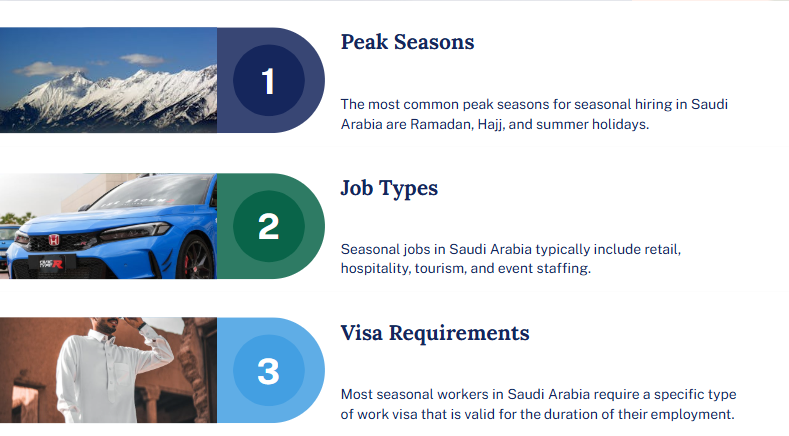
Made by piktochart.com
1. Workforce Shortages and Skill Gaps
Despite high demand, businessesstruggle to find workers with niche skills like multilingual communication orcrowd management. The Seasonal Employment Program by KidanaDevelopment Company addresses this by requiring candidates to pass technicalevaluations and interviews, ensuring proficiency in roles ranging from riskmanagement to healthcare.
2. Regulatory Compliance
Seasonal work visas mandate a SAR2,000 refundable deposit per worker, incentivizing employers to ensure timelydepartures post-season. The Ajeer Al-Hajj platform simplifiescompliance by digitizing permit applications, reducing processing times fromweeks to days.
3. Productivity Concerns
Dual employment remains a hurdle,with many seasonal workers juggling temporary and full-time roles. A 2023 studyfound that 60% of Hajj Terminal staff reported fatigue from working 14-hourshifts across multiple jobs. To mitigate this, MHRSD now prioritizes unemployedSaudis and students for seasonal roles, freeing up permanent employees.
Strategic Advantages of Seasonal Hiring in Saudi Arabia
Economic Diversification
Temporary hiring supports Vision2030’s goals by creating entry points for youth and women in sectors liketourism. For example, 35% of seasonal roles during the 2024 Hajj season werefilled by Saudi women, a 12% increase from 2023.
Cost Efficiency
Businesses save up to 20%on labor costs by avoiding year-round salaries and benefits. The Ajeerplatform further reduces overheads by connecting employers with pre-vettedcandidates, slashing recruitment timelines by 40%.
Scalability
Hotels in Makkah scale from 50 to500+ staff during Hajj, ensuring seamless service for 2 million pilgrims. Thisagility is replicated in Riyadh’s retail sector, where stores double theirworkforce ahead of holiday sales.
Case Study: Hajj Season Workforce Management
The Hajj season exemplifies SaudiArabia’s seasonal hiring prowess. In 2024, the MHRSD issued 11,715Ajeer Al-Hajj permits, enabling 924 businesses to onboard temporary staff.Key strategies include:
- Localized Recruitment: 80% of hires must reside in Makkah, reducing accommodation costs and commute times.
- Skill-Based Training: Programs like Kidana’s Crowd Management Certification prepare workers for high-pressure environments.
- Digital Integration: Mobile-friendly platforms like Ajeer allow workers to submit documents and track applications in real time.
Future Outlook: Technology and Policy Innovations
AI-Driven Matching
Platforms like GO-Globe use machinelearning to align candidate skills with employer needs, improving hire qualityby 25%.
Extended Visa Windows
Proposals to extend seasonal visasbeyond four months could benefit sectors like agriculture, where harvest cyclesvary.
Enhanced Worker Protections
New MHRSD guidelines mandate restperiods and overtime pay for seasonal workers, reducing burnout and turnover.
Want to Recruitment Seasonal Workers for Saudi Arabia?
Hiring seasonal workers from overseas can be really beneficialfor contract based companies. Candidates sourcing, interviewing and visa processingcan be very cost effective. To get started with overseas seasonal hiring forSaudi Arabia, you can partner with a reputable overseas recruitment agency likeDelta International Recruitment Agency that can help you start to end ofcandidate processing pipeline.
Conclusion
Saudi Arabia’s seasonal hiring boomreflects a broader shift toward a flexible, diversified economy. By addressingregulatory, logistical, and skill-related challenges through platforms likeAjeer and Kidana, the Kingdom is setting a benchmark for temporary workforcemanagement. For businesses, success lies in early planning, leveragingtechnology, and prioritizing worker well-being. As Vision 2030 progresses,seasonal hiring will remain a cornerstone of Saudi Arabia’s laborstrategy—offering opportunities for growth, innovation, and inclusivity.