



Understanding the Importance of an Ideal Candidate Profile
Defining an Ideal Candidate Profile
An ideal candidate profile outlines the skills, experience, and qualities that the small business is looking for in a candidate. It serves as a blueprint for the hiring process, guiding recruiters and hiring managers in identifying the most suitable candidates. By clearly defining the desired attributes, an ideal candidate profile helps ensure that the hiring team is aligned on the requirements and expectations for the role.
In creating an ideal candidate profile, small businesses should consider the specific job requirements and qualifications. This includes identifying the necessary skills, educational background, and professional experience that are essential for success in the role. Additionally, defining desired skills and competencies allows the hiring team to assess candidates based on their ability to perform specific tasks and contribute to the organization’s goals.
To further enhance the profile, small businesses should also consider cultural fit. This involves evaluating whether a candidate’s values, work style, and personality align with the company’s culture and values. Cultural fit is crucial for fostering a positive work environment and ensuring that the candidate will thrive within the organization.
Lastly, motivation and alignment with company values should be taken into account. Small businesses should assess a candidate’s level of enthusiasm for the role and their alignment with the company’s mission and values. This helps ensure that the candidate is genuinely interested in the position and is likely to be committed and engaged if hired.
In summary, defining an ideal candidate profile is a critical step in the hiring process. It provides clarity and guidance to the hiring team, ensuring that they are focused on finding candidates who possess the necessary skills, experience, and qualities to succeed in the role.
Benefits of Creating an Ideal Candidate Profile
Creating an ideal candidate profile offers several benefits for small businesses:
- Efficient Hiring Process: By clearly defining the skills, experience, and qualities required for the role, small businesses can attract candidates who closely match their requirements, reducing the time and effort spent on screening and interviewing.
- Improved Quality of Hires: An ideal candidate profile helps small businesses identify candidates who possess the necessary qualifications and attributes, increasing the likelihood of hiring individuals who can contribute to the company’s success.
- Enhanced Retention: When small businesses hire candidates who align with the ideal candidate profile, there is a higher chance of job satisfaction and long-term retention, reducing turnover and associated costs.
- Better Cultural Fit: By considering cultural fit as part of the ideal candidate profile, small businesses can ensure that new hires align with the company’s values and work well within the existing team.
- Increased Productivity: Hiring candidates who possess the desired skills and competencies outlined in the ideal candidate profile can lead to increased productivity and performance, as they are better equipped to handle the responsibilities of the role.
"Tip: Creating an ideal candidate profile allows small businesses to attract and select candidates who are the best fit for the job, leading to a more efficient and successful hiring process.
Impact of an Ideal Candidate Profile on Hiring Success
Creating an ideal candidate profile has a significant impact on hiring success. By clearly defining the skills, experience, and qualities that the small business is looking for in a candidate, the hiring team can align their efforts and improve the quality of hires.
This not only enhances the candidate experience but also contributes to the long-term success of the organization. Effective advertising and selection criteria play a crucial role in attracting and evaluating candidates based on specific qualifications and attributes.
Key Components of an Ideal Candidate Profile
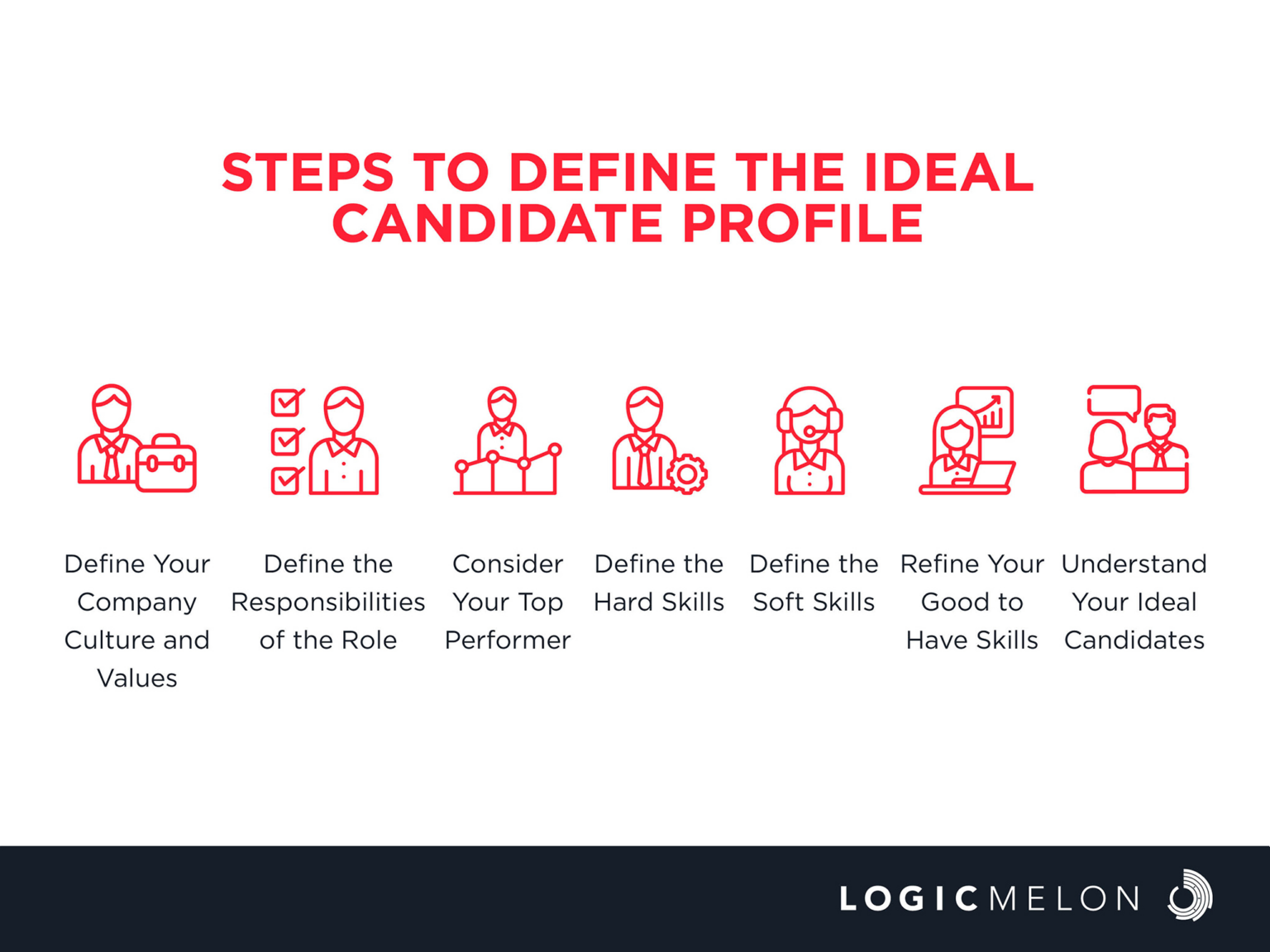
Image Source:logicmelon
Identifying Job Requirements and Qualifications
When identifying job requirements and qualifications, it is important to first identify any skills gaps that may exist within your organization. This will help you attract candidates with the right qualifications and ensure a successful recruitment campaign.
Additionally, writing clear and detailed job descriptions is crucial to attracting the right candidates. Avoid vague descriptions and focus on showcasing your employer brand. According to a survey, around 17% of job seekers do not apply for a role due to a vague job description.
Finally, consider developing an ideal candidate profile that outlines the essential skills, experiences, and qualities required for the role. This will help you evaluate candidates more effectively and make informed hiring decisions.
Defining Desired Skills and Competencies
When defining the desired skills and competencies for a role, it is important to consider the specific experiences and skills required to generate the desired results. These can include technical skills, industry knowledge, and soft skills such as communication and problem-solving abilities.
Additionally, identifying the key performance indicators (KPIs) that will be measured for this role is crucial. This allows for a clear understanding of the expectations and accountabilities of the position.
To effectively communicate the desired skills and competencies, it is recommended to use a bulleted list. This format allows for easy readability and highlights the essential qualifications. Here is an example:
- Technical skills: Proficiency in programming languages such as Python and Java
- Industry knowledge: Familiarity with the latest trends and developments in the technology sector
- Communication skills: Strong verbal and written communication abilities
- Problem-solving abilities: Ability to analyze complex problems and propose effective solutions
Remember, the desired skills and competencies should align with the specific requirements of the role and contribute to the overall success of the organization.
Determining Cultural Fit
Determining cultural fit is an important aspect of creating an ideal candidate profile. It involves assessing whether a candidate’s values, beliefs, and behaviors align with the company’s culture. This ensures that the candidate will be able to thrive and contribute positively to the team.
- Company values: Evaluate whether the candidate shares similar values as the company. This can be assessed through behavioral questions or scenarios that reflect the company’s values.
- Team dynamics: Assess how well the candidate will fit into the existing team. Consider their communication style, collaboration skills, and ability to work well with others.
- Organizational culture: Determine if the candidate’s work style and preferences align with the company’s culture. This can include factors such as work-life balance, flexibility, and decision-making processes.
To determine cultural fit, consider the following:
Remember, cultural fit is not about hiring people who are exactly the same, but rather finding individuals who can adapt and thrive within the company’s unique culture.
Tip: During the interview process, consider incorporating behavioral questions that assess cultural fit. For example, ask candidates to describe a situation where they had to navigate a challenging team dynamic or adapt to a new work environment.
Considering Future Growth and Development
When creating an ideal candidate profile, it is crucial to consider the future growth and development of the candidate. This involves assessing their potential for growth within the organization and their willingness to learn and adapt to new challenges. Identifying candidates who have a growth mindset and a desire for continuous learning can contribute to the long-term success of the company.
To ensure future growth and development, organizations can:
- Provide opportunities for professional development and training programs to enhance the skills and knowledge of employees.
- Mentorship programs can be implemented to support the growth and development of employees.
- Succession planning can be used to identify high-potential employees and prepare them for future leadership roles.
By considering future growth and development in the ideal candidate profile, organizations can build a strong and adaptable workforce that can contribute to the company’s long-term success.
Evaluating Motivation and Alignment with Company Values
When evaluating a candidate’s motivation and alignment with company values, it is important to consider their level of enthusiasm and passion for the role and the organization. Motivation plays a crucial role in determining a candidate’s commitment and drive to succeed. It is essential to assess whether the candidate is genuinely interested in the position and the company, or if they are simply looking for any job opportunity.
Another important aspect to evaluate is the candidate’s alignment with the company’s values. This can be done by asking specific questions about the candidate’s beliefs and principles, and how they align with the organization’s core values. It is important to assess whether the candidate’s values are in line with the company’s culture and mission.
To effectively evaluate motivation and alignment with company values, consider the following:
- Conduct behavioral interviews to assess the candidate’s past experiences and actions that demonstrate their motivation and alignment with company values.
- Ask open-ended questions that allow the candidate to share their personal values and how they align with the organization.
- Utilize reference checks to gather insights from previous employers or colleagues about the candidate’s motivation and alignment with company values.
Tip: During the interview process, pay attention to the candidate’s enthusiasm, passion, and examples of how they have demonstrated alignment with company values in their previous roles.
Methods for Creating an Ideal Candidate Profile

Conducting Job Analysis
Job analysis is a crucial step in the hiring process. It involves gathering and analyzing information about the responsibilities, tasks, and requirements of a specific job role. By conducting a thorough job analysis, organizations can gain a clear understanding of the skills, qualifications, and competencies needed for the role. This information serves as the foundation for creating an ideal candidate profile.
Collaborating with Hiring Managers and Stakeholders
Collaborating with hiring managers and stakeholders is essential in creating an ideal candidate profile. By involving them in the process from the start, you ensure that their input and expertise are considered, increasing the chances of finding the right candidate. Stakeholders value being part of the process and their approval is often crucial when hiring new employees.
To effectively collaborate with hiring managers and stakeholders, follow these steps:
- Involve them in job requisition process: Engage hiring managers and stakeholders in defining the job requirements and qualifications. Their insights can help ensure that the profile accurately reflects the needs of the role.
- Seek their input on desired skills and competencies: Collaborate with hiring managers and stakeholders to identify the specific skills and competencies that are essential for success in the role.
- Consider their perspective on cultural fit: Hiring managers and stakeholders can provide valuable insights into the company culture and the type of candidate who would thrive within it.
- Discuss future growth and development: Collaborate with hiring managers and stakeholders to determine the potential for growth and development within the role and how it aligns with the candidate’s career aspirations.
- Evaluate motivation and alignment with company values: Engage hiring managers and stakeholders in assessing the candidate’s motivation and alignment with the company’s values.
By collaborating with hiring managers and stakeholders, you can ensure that the ideal candidate profile is comprehensive and aligned with the needs and goals of the organization. This collaborative approach increases the likelihood of finding the right candidate and achieving hiring success.
Utilizing Competency Frameworks
Utilizing competency frameworks is a valuable method for assessing candidates’ skills and abilities. Competency frameworks provide a structured approach to evaluating candidates based on specific criteria. By using a competency framework, hiring managers can ensure that they are assessing candidates consistently and objectively.
One effective way to present structured, quantitative data is through a Markdown table. This table can outline the key competencies required for the role and provide a rating scale to assess candidates’ proficiency in each competency.
Here is an example of a competency table:
Competency Proficiency Level Communication Skills Advanced Problem-Solving Intermediate Leadership Advanced
In addition to using competency frameworks, it is important to consider qualitative points when evaluating candidates. This can be done through a bulleted or numbered list. Some qualitative points to consider may include:
- Ability to work in a team
- Adaptability and flexibility
- Strong work ethic
Remember, when utilizing competency frameworks, it is essential to align them with the specific requirements of the role and the organization’s overall strategy.
"Tip: When assessing candidates against the competency framework, consider using competency-based interviews. These interviews focus on specific examples from candidates’ past experiences to assess their competency in key areas. "
By utilizing competency frameworks effectively, organizations can ensure they are selecting candidates who possess the necessary skills and abilities to excel in the role.
Leveraging Employee Success Profiles
Employee success profiles provide valuable insights into the skills, experiences, and achievements of high-performing employees. By leveraging these profiles, organizations can identify the key attributes that contribute to success within their specific context. This information can then be used to inform the ideal candidate profile and guide the hiring process.
Employee success profiles can be created through various methods, such as performance evaluations, interviews, and assessments. It is important to regularly update and refine these profiles to ensure they remain relevant and aligned with the organization’s evolving needs.
Analyzing High-Performing Employees
Analyzing high-performing employees is crucial for understanding the qualities and skills that contribute to their success. By studying their performance, organizations can identify patterns and characteristics that can be used to create an ideal candidate profile. This profile can then be used to attract and select candidates who have the potential to excel in the role.
To analyze high-performing employees effectively, organizations can utilize structured, quantitative data. This can be presented in a table format, highlighting key metrics such as sales revenue, customer satisfaction ratings, or project completion rates. By examining these metrics, organizations can identify the specific skills and qualities that are correlated with high performance.
In addition to quantitative data, organizations can also gather qualitative insights through interviews or surveys. This can provide valuable information about the behaviors, attitudes, and motivations of high-performing employees. By understanding these factors, organizations can further refine the ideal candidate profile and ensure a better fit between candidates and the role.
Key Takeaways:
- Analyzing high-performing employees helps identify the qualities and skills that contribute to their success.
- Utilize structured, quantitative data to identify key metrics correlated with high performance.
- Utilize structured, quantitative data to identify key metrics correlated with high performance.
- Utilize structured, quantitative data to identify key metrics correlated with high performance.
Challenges in Creating an Ideal Candidate Profile

Balancing Specificity and Flexibility
When creating an ideal candidate profile, it is important to strike a balance between specificity and flexibility. Specificity allows you to clearly define the desired qualifications, skills, and competencies for the role, ensuring that you attract candidates who meet your requirements. On the other hand, flexibility allows you to consider a wider range of candidates who may bring unique perspectives and experiences to the table.
To achieve this balance, consider the following:
- Clearly define the must-have qualifications and skills, while also being open to transferrable skills and potential for growth.
- Be mindful of the potential trade-off between targeting a narrower audience and the quality and quantity of applicants you aim to receive.
- Regularly review and update the candidate profile to ensure it remains relevant and aligned with your organization’s needs.
Remember, finding the ideal candidate is not about finding a perfect match, but rather someone who has the potential to thrive and contribute to your organization’s success.
Addressing Bias and Diversity
Addressing bias and promoting diversity in the candidate profile is crucial for creating an inclusive and equitable hiring process. It is important to recognize and challenge any unconscious biases that may influence decision-making. Diversity should be embraced and celebrated, as it brings different perspectives and experiences to the table. To ensure fairness and equal opportunities, consider the following:
- Implement a structured interview process that focuses on skills and qualifications rather than personal characteristics.
- Use blind screening techniques to remove identifying information from resumes and applications.
- Provide diversity and inclusion training to hiring managers and interviewers.
By addressing bias and promoting diversity, organizations can create a candidate profile that attracts a diverse pool of qualified candidates and fosters a culture of inclusivity.
Aligning with Organizational Strategy
Aligning the ideal candidate profile with the organizational strategy is crucial for ensuring that the hiring process supports the company’s long-term goals and objectives. By aligning the profile with the strategy, organizations can attract candidates who possess the skills, experience, and values that are essential for driving the company forward. This alignment also helps in creating a cohesive and high-performing team that is aligned with the overall vision of the organization.
To effectively align the ideal candidate profile with the organizational strategy, organizations can:
- Conduct a thorough analysis of the company’s strategic objectives and identify the key competencies and qualities required to achieve those objectives.
- Collaborate with hiring managers and stakeholders to understand their specific needs and align the candidate profile accordingly.
- Utilize competency frameworks to define the desired skills and competencies for each role.
- Leverage employee success profiles to identify the traits and characteristics of high-performing employees.
- Analyze the profiles of existing high-performing employees to identify common attributes and align the candidate profile with those attributes.
By aligning the ideal candidate profile with the organizational strategy, organizations can ensure that they are hiring candidates who not only meet the immediate needs of the company but also have the potential to contribute to its long-term success.
Adapting to Changing Job Market
Adapting to the changing job market is crucial for success in today’s dynamic business environment. With advancements in technology and evolving industry trends, it is essential for organizations to stay agile and responsive to remain competitive. Here are some strategies to navigate the changing job market:
- Continuous Learning: Embrace a growth mindset and actively seek opportunities for learning and development. Stay updated with the latest industry trends, acquire new skills, and adapt to changing job requirements.
- Proactive Approach: Take a proactive approach to anticipate and prepare for changes in the job market. Stay informed about emerging technologies, industry disruptions, and evolving customer demands.
- Embrace Flexibility: Be open to new ways of working and adapt to flexible work arrangements. Emphasize the importance of remote work, virtual collaboration, and digital communication tools.
- Networking: Build a strong professional network and engage in networking activities to stay connected with industry professionals and potential job opportunities.
- Market Research: Conduct regular market research to understand the current job market trends, skill demands, and emerging job roles. Use this information to align your skills and qualifications with market needs.
- Resilience: Develop resilience to cope with uncertainties and challenges in the job market. Embrace change, learn from failures, and adapt your career plans accordingly.
Adapting to the changing job market requires a proactive and flexible mindset. By staying informed, continuously learning, and embracing new opportunities, individuals can thrive in a dynamic business landscape.
Managing Expectations of Hiring Managers
Managing the expectations of hiring managers is crucial for a successful recruitment process. Hiring managers play a key role in identifying and selecting the best candidates for their teams. To ensure alignment and avoid miscommunication, it is important to establish clear expectations from the beginning.
One effective way to manage expectations is by providing detailed job descriptions. These descriptions should outline the tasks, responsibilities, and deliverables of the role. By clearly defining what the role entails, hiring managers can better understand the type of candidate they are looking for and communicate their needs to the recruitment team.
Additionally, regular communication and collaboration between hiring managers and the recruitment team are essential. This allows for ongoing feedback and updates on the progress of the hiring process. It also helps in addressing any concerns or changes in requirements that may arise.
Lastly, it is important to set realistic timelines and expectations for the recruitment process. This includes providing hiring managers with a clear understanding of the time it takes to source, screen, and interview candidates. By managing expectations regarding the timeline, hiring managers can have a realistic view of the process and make informed decisions.
In summary, managing the expectations of hiring managers involves providing detailed job descriptions, fostering communication and collaboration, and setting realistic timelines. By doing so, organizations can ensure a smooth and successful recruitment process.
Best Practices for Creating an Ideal Candidate Profile
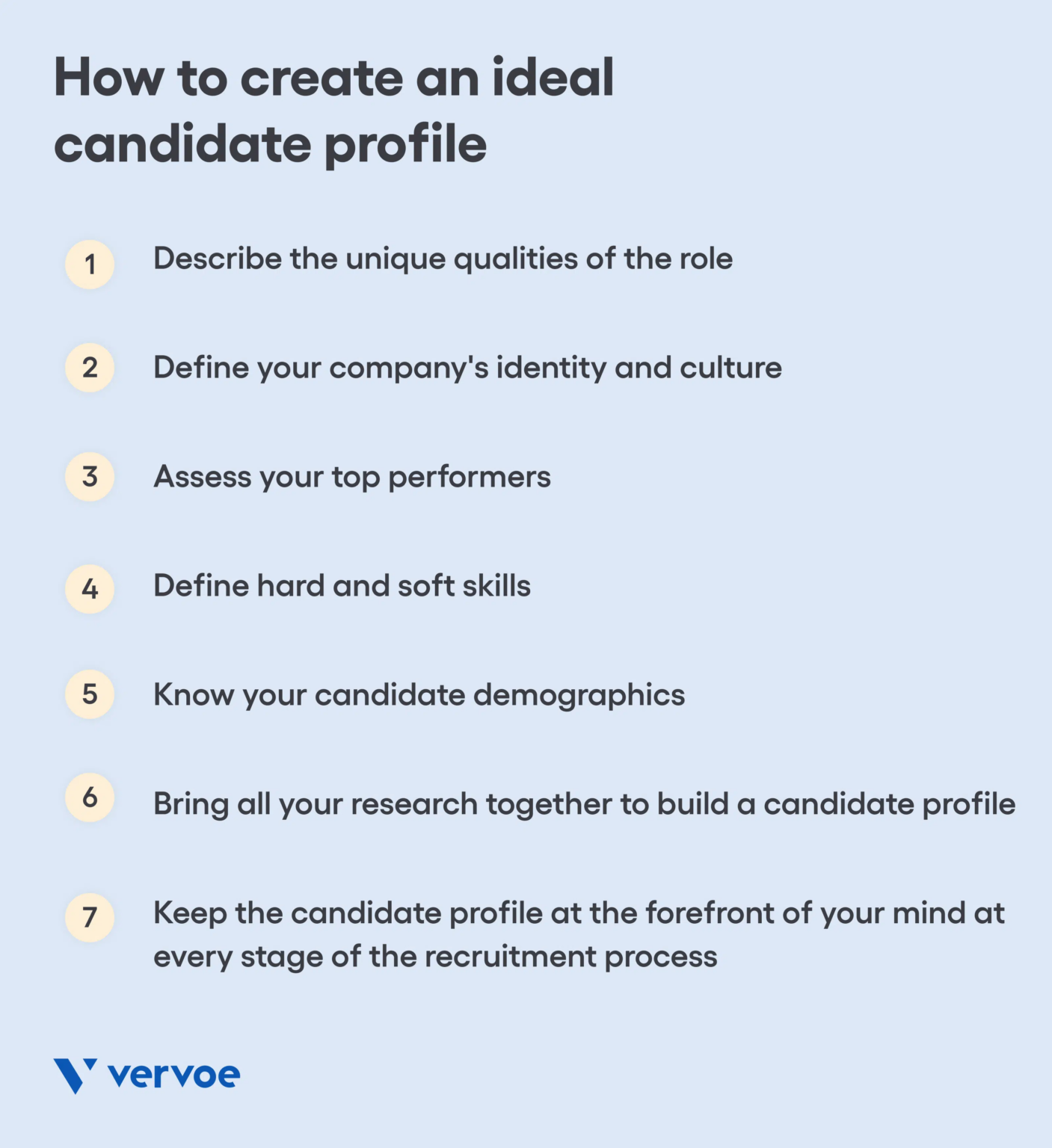
Image Source: vervoe
Involving Multiple Stakeholders
When creating an ideal candidate profile, it is crucial to involve multiple stakeholders throughout the process. This ensures that the profile reflects the needs and expectations of various departments and teams within the organization. By including representatives from HR, hiring managers, team leaders, and even current employees, a more comprehensive and well-rounded profile can be developed.
Involving multiple stakeholders also promotes a sense of ownership and buy-in, as each stakeholder has the opportunity to contribute their insights and perspectives. This collaborative approach helps to align the candidate profile with the overall organizational strategy and goals.
To facilitate stakeholder involvement, regular meetings and communication channels should be established. This allows for ongoing feedback and updates, ensuring that the candidate profile remains relevant and up-to-date.
Benefits of involving multiple stakeholders:
- Diverse perspectives and insights
- Increased ownership and buy-in
- Alignment with organizational strategy
- Enhanced collaboration and communication
By involving multiple stakeholders, organizations can create a more accurate and effective ideal candidate profile that leads to successful hiring outcomes.
Using Data and Analytics
Data and analytics play a crucial role in creating an ideal candidate profile. By leveraging data-driven insights, organizations can make informed decisions throughout the hiring process. Analyzing key hiring metrics such as time-to-hire and cost-per-hire can provide valuable information on the effectiveness of the profile. Additionally, collecting feedback from hiring managers and candidates can help identify areas for improvement.
To further enhance the use of data and analytics, organizations can implement a competency-based interviewing approach. This method allows recruiters to assess candidates’ skills and competencies objectively, ensuring a better fit for the role and the company. By using data and analytics, organizations can optimize their hiring process and increase the chances of finding the ideal candidate.
Conducting Competency-Based Interviews
Conducting competency-based interviews is an effective way to assess a candidate’s skills, abilities, and behaviors. These interviews focus on specific competencies that are essential for success in the role. Skills-based questions are designed to find out whether a candidate has experience working with any software, tools, or knowledge that they will need for their job. Behavioral questions ask about how candidates handled situations in their previous workplace, testing soft skills such as adaptability, critical thinking, communication, and attention to detail. Situational questions discuss how candidates would react to situations in the job, addressing the challenges and problems they will need to address.
To ensure consistency and fairness in the interview process, it is recommended to use a structured interview format. This involves asking all candidates the same questions and assigning scores to their answers. A structured interview process reduces variability and leads to more consistent hiring results. Consider using an interview scorecard template to evaluate candidates against key objectives, outcomes, and company values.
Regularly Updating and Refining the Profile
Regularly updating and refining the ideal candidate profile is