


Staring into the future, even anear one like 2025, can feel like staring into a crystal ball – especially whenit comes to predicting your staffing needs. Many business leaders searching foranswers on this topic are finding generic advice or complex formulas that don'tquite fit their unique situations. They're struggling to balance currentworkload, anticipated growth, and the ever-changing economic landscape.Overstaffing leads to wasted resources, while understaffing can crippleproductivity and damage employee morale. The pressure to get it right isimmense.
But don't worry! This comprehensivearticle will provide you with a clear, actionable roadmap for accurately calculatingyour staffing needs in 2025. We'll break down the key factors, exploreproven methodologies, and equip you with the tools to confidently plan for thefuture of your workforce. Get ready to take control and ensure your team isperfectly positioned for success. Let’s answer:
Why Accurate Staffing Matters
Accurate staffing isn't just aboutfilling positions, it's about Easy to Use Formula to Calculate Required Staff in 2025
- Improved Productivity: Having the right people with the right skills ensures tasks are completed efficiently and effectively.
- Reduced Costs: Avoid the financial drain of overstaffing or the costly consequences of employee burnout due to understaffing.
- Enhanced Customer Experience: A well-staffed team can provide better service, leading to happier and more loyal customers.
- Increased Employee Morale: Adequate staffing reduces workload pressure on existing employees, boosting morale and reducing turnover.
- Strategic Growth: Accurate forecasting allows you to proactively prepare for future growth opportunities.
Step-by-Step Guide to Calculating Your Staffing Needs in 2025
Forecasting your workforcerequirements involves a multi-faceted approach. These steps provide a practicalframework:
1. Analyze Current Workforce Data:
Start with a deep dive into yourexisting employee data. This includes:
- Employee headcount: By department and role.
- Employee skills and qualifications: A matrix of skills will help you identify any current gaps
- Absenteeism and turnover rates: Highlight what's working, and what's not
- Performance metrics: Individual and team performance against KPIs
- Labor costs: This is a key factor for budgeting
2. Forecast Future Demand:
This is where you'll project howyour business will evolve like:
Project your sales for 2025,considering market trends, economic conditions, and your company's growthplans.
Factor in the launch of any newofferings and their potential impact on workload. Also, if you plan to enternew markets, estimate the additional staff required to support thoseoperations. Try to consider how automation and new technologies might changeyour staffing needs. Will new roles be required? Will old ones become obsolete?
3. Determine Workload:
Assess the amount of work eachdepartment or role will need to handle based on your demand forecast:
- Task Analysis: Break down each job into its core tasks and estimate the time required to complete them.
- Workflow Analysis: Map out your workflows to identify potential bottlenecks and areas where staffing adjustments may be needed.
- Projected Volume: Use your sales and demand forecasts to project the volume of work for each task and workflow.
4. Calculate Required Staff:
This is where the numbers cometogether.
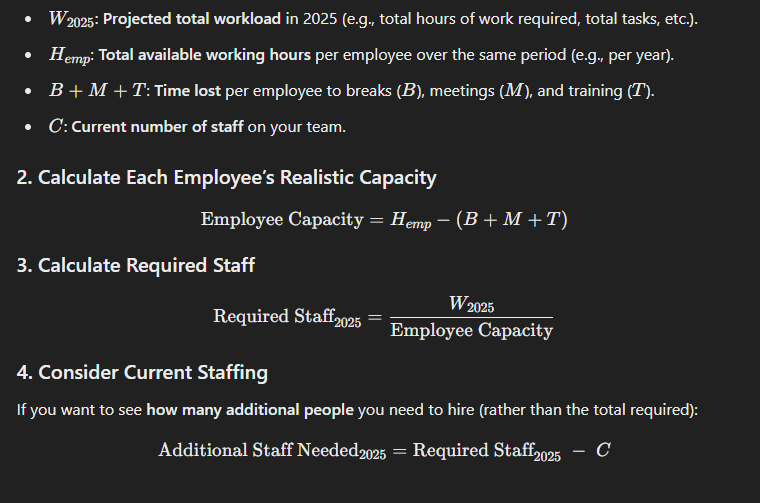
- Determine the amount of work each employee can realistically handle within a specific timeframe. Consider factors like breaks, meetings, and training.
- Divide the total workload by the workload per employee to calculate the number of staff required for each role or department.
- To accurately calculate your staffing needs in 2025, use formulas but consider current staffing numbers
5. Account for Attrition and Absence:
No workforce remains static. Youhave to account for people leaving.
- Historical Turnover Rates: Analyze past turnover rates to predict future attrition.
- Absenteeism Rates: Factor in average sick leave and vacation time.
- Contingency Planning: Consider potential unforeseen absences (e.g., parental leave, long-term illness).
6. Skill Gap Analysis and Training:
Identify any skills gaps betweenyour current workforce and the skills required to meet future demands.
- Skills Inventory: Create a detailed inventory of your employees' skills and qualifications.
- Skills Gap Assessment: Compare your skills inventory with the skills required for future roles and projects.
- Training and Development: Develop training programs to upskill your existing workforce and address any identified skills gaps.
7. Consider External Factors:
External forces will always play arole in forecasting.
- Research the availability of qualified candidates in your area.
- Monitor economic indicators to anticipate potential fluctuations in demand and staffing costs.
- Stay informed about industry trends and best practices for workforce planning.
- Be aware of any changes in labor laws or regulations that could impact your staffing requirements.
8. Regularly Review and Adjust:
Calculating your staffing needsin 2025 is not a one-time exercise. Regularly review your forecast andmake adjustments as needed.
- Monitor Key Metrics: Track key metrics such as sales, productivity, turnover, and customer satisfaction to identify potential staffing issues.
- Gather Feedback: Solicit feedback from employees and managers to gain insights into workload and staffing needs.
- Update Your Forecast: Regularly update your forecast based on new information and changing circumstances.
Tools and Technologies to Aid Your Calculations
Many software solutions canstreamline the process of workforce planning:
- Workforce Management Software
- Recruitment Agencies
- HR Analytics Platforms
- Forecasting Software
- Spreadsheet Software
Conclusion
Accurately calculating your staffingneeds in 2025 is crucial for sustained success. By following the stepsoutlined in this guide, you can develop a robust workforce plan that alignswith your business goals. Remember to continuously monitor your performance,adapt to changing circumstances, and leverage technology to optimize yourstaffing decisions. With careful planning and execution, you can ensure yourteam is perfectly positioned to thrive in the year ahead.