



As an employer, managing yourworkforce effectively is crucial for the success of your business. Oneessential aspect of workforce management is headcount reporting. In thisarticle, we will delve into the world of headcount reporting, exploring itsdefinition, importance, and key components. We will also discuss how to createan accurate headcount report and provide tips for employers to make the mostout of this valuable tool.
What is Headcount Reporting?
Headcount reporting is the process oftracking and reporting the number of employees in an organization at a specificpoint in time. It provides a snapshot of the workforce, including details suchas employee names, job titles, departments, and locations. Headcount reportsare typically generated on a regular basis, such as monthly or quarterly, tohelp employers monitor their workforce and make informed decisions.
Why is Headcount Reporting Important?
Headcount reporting is vital foremployers because it:
- Helps with workforce planning: Accurate headcount reports enable employers to identify staffing needs, plan for future growth, and make informed decisions about recruitment and talent management.
- Supports compliance: Headcount reports are essential for compliance with labor laws and regulations, such as tax filings and workers' compensation.
- Facilitates budgeting: By knowing the exact number of employees, employers can accurately budget for salaries, benefits, and other workforce-related expenses.
- Enhances HR analytics: Headcount reports provide valuable insights into workforce trends, helping HR professionals identify areas for improvement and optimize HR strategies.
Key Components of a Headcount Report
A comprehensive headcount reportshould include the following components:
- Employee details: Name, job title, department, location, and employee ID.
- Headcount numbers: Total number of employees, including full-time, part-time, and contract workers.
- Breakdown by department: Headcount by department or team to help identify staffing needs.
- Location-based headcount: Headcount by location to facilitate resource allocation and planning.
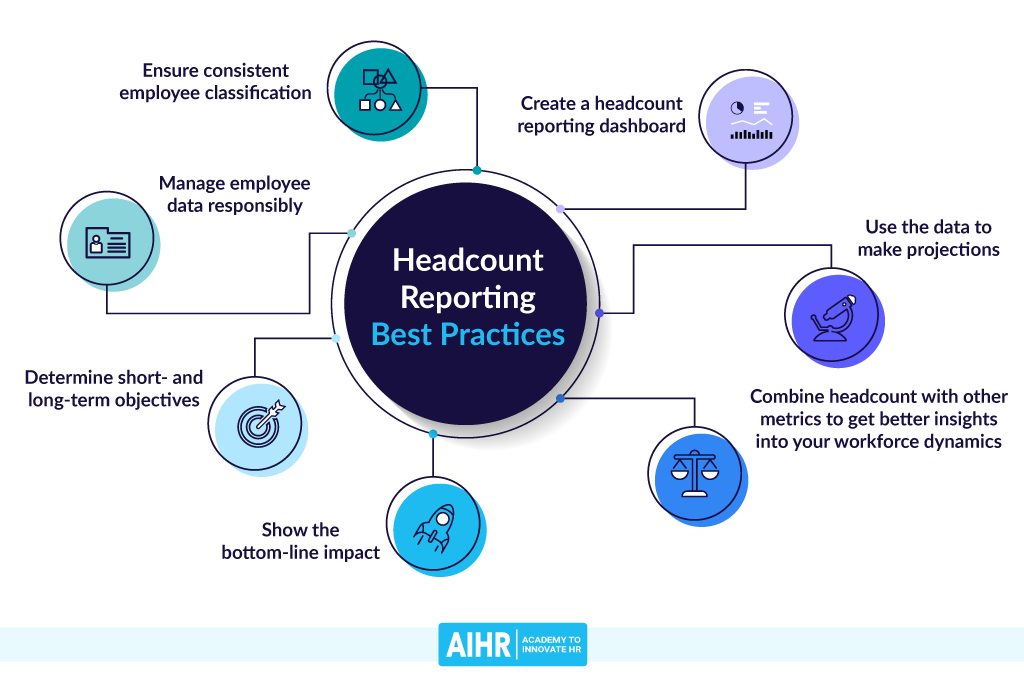
Image Source: https://www.aihr.com/blog/headcount-reporting/
How to Create an Accurate Headcount Report
To create an accurate headcountreport, follow these steps:
- Define the reporting period: Determine the frequency of headcount reports, such as monthly or quarterly.
- Gather data: Collect employee data from HR systems, payroll records, and other relevant sources.
- Verify data accuracy: Ensure data is up-to-date and accurate to prevent errors or discrepancies.
- Use reporting tools: Utilize HR software or spreadsheets to generate and format headcount reports.
Tips for Employers
- Regularly review headcount reports: Stay up-to-date with workforce changes and adjust strategies accordingly.
- Analyze headcount trends: Identify patterns and insights to inform HR decisions and optimize workforce planning.
- Ensure data security: Protect employee data and ensure compliance with data protection regulations.
In conclusion, headcount reporting isa vital tool for employers to manage their workforce effectively. Byunderstanding the importance of headcount reporting and following bestpractices, employers can make informed decisions, optimize workforce planning,and drive business success.