


In recent years, more and morecompanies are eliminating degree requirements in their hiring processes. Thisshift toward skills-based hiring is reshaping the job market and creating amore diverse and inclusive workforce. Here’s a look at the impact of this trendand what it means for employers and job seekers alike.
Why Eliminate Degree Requirements?
1. Expanding Talent Pools: Removingdegree requirements opens the door to a wider range of candidates, many of whompossess valuable skills and experience but may not have a formal degree. Thisapproach recognizes that skills and competencies can be acquired throughnon-traditional paths, such as online courses, vocational training, oron-the-job experience.
2. Enhancing Diversity and Inclusion: Degreerequirements can unintentionally perpetuate social and racial inequalities. Byfocusing on skills rather than credentials, companies can attract candidatesfrom diverse backgrounds, including those who may not have had the financialmeans or opportunity to pursue higher education.
3. Addressing Skills Gaps: Infast-evolving industries, the skills needed for certain roles can changerapidly. Skills-based hiring ensures that candidates have the up-to-dateexpertise needed for success, regardless of their educational background.
Benefits for Employers
1. Increased Innovation andPerformance: Diverse teams bring a variety of perspectives and ideas, whichcan drive innovation and improve problem-solving. Companies that hire based onskills rather than degrees often find that their teams are more dynamic and effective.
2. Better Alignment with BusinessNeeds: By identifying the specific skills required for a role,employers can ensure that candidates are well-suited to meet their needs. Thiscan lead to improved job performance and employee satisfaction.
3. Reduced Turnover Rates:Employees who are hired based on their skills and fit within the companyculture are more likely to feel valued and stay longer, reducing turnover ratesand associated hiring costs.
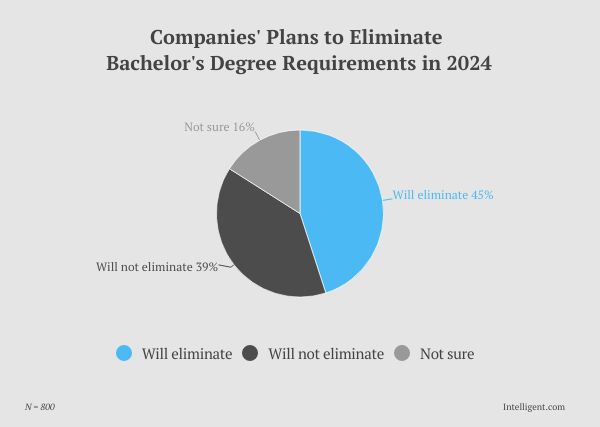
Image Source: tradeandindustrydev.com
Challenges and Considerations
1. Changing Mindsets:Transitioning to skills-based hiring requires a shift in mindset for manyemployers. It involves re-evaluating job descriptions, interviewing techniques,and assessment methods to focus on practical skills rather than academic achievements.
2. Ensuring Fair Assessment:Implementing fair and effective skills assessments is crucial. Employers needto design tests and evaluation processes that accurately measure candidates’ abilitieswithout introducing bias.
3. Overcoming Institutional Barriers: Someindustries have entrenched norms regarding educational requirements, andchanging these can be challenging. Companies need to balance the need forprofessional credentials with the benefits of a more inclusive approach.
Conclusion
Eliminating degree requirements infavor of skills-based hiring offers numerous advantages for both employers andjob seekers. By focusing on what candidates can do rather than where theystudied, companies can create more inclusive, innovative, and effective teams.As more organizations embrace this trend, it has the potential to transform theworkforce and promote greater equity and opportunity for all.
By reevaluating traditional hiringpractices, businesses can tap into a broader talent pool and set the stage forfuture success in an increasingly competitive market.