


Searching for “recruitmentchallenges in the Middle East” yields alarming statistics: 61% of tech rolesremain unfilled due to talent shortages, hiring cycles stretch 33 days onaverage, and 74% of firms report losing candidates to competitors. These painpoints stem from fragmented strategies, regulatory complexities, and rapideconomic shifts in sectors like renewable energy and AI. For Middle Easterncompanies, 2025 demands a proactive recruitment plan that aligns with nationalvisions like Saudi Vision 2030 while addressing skill gaps and culturaldiversity. This blog outlines a data-driven framework to build resilient hiringpipelines, leverage overseas partnerships, and future-proof your workforce.
Why Middle Eastern Companies Need a Recruitment Plan for 2025
The Middle East’s $3.8 trillioneconomic transformation hinges on overcoming three critical challenges:
- Talent Shortages
High-growth sectors like cybersecurity and renewable energy face a 40% skills gap. Local universities produce only 28% of required IT graduates, forcing firms to compete globally for specialists. - Regulatory Pressures
Nationalization mandates (e.g., UAE’s Emiratization) require 10-30% of roles to go to citizens, complicating expat hiring. Visa reforms in Saudi Arabia now demand proof of local talent unavailability before international recruitment. - Cultural & Logistical Hurdles
Hybrid work adoption lags at 32% in the GCC, while 68% of expats cite relocation costs as a barrier. Firms must balance Sharia-compliant HR policies with Western talent expectations.
Without a structured recruitmentplan, companies risk project delays, 25% higher hiring costs, andnon-compliance penalties exceeding $27,000 per violation.
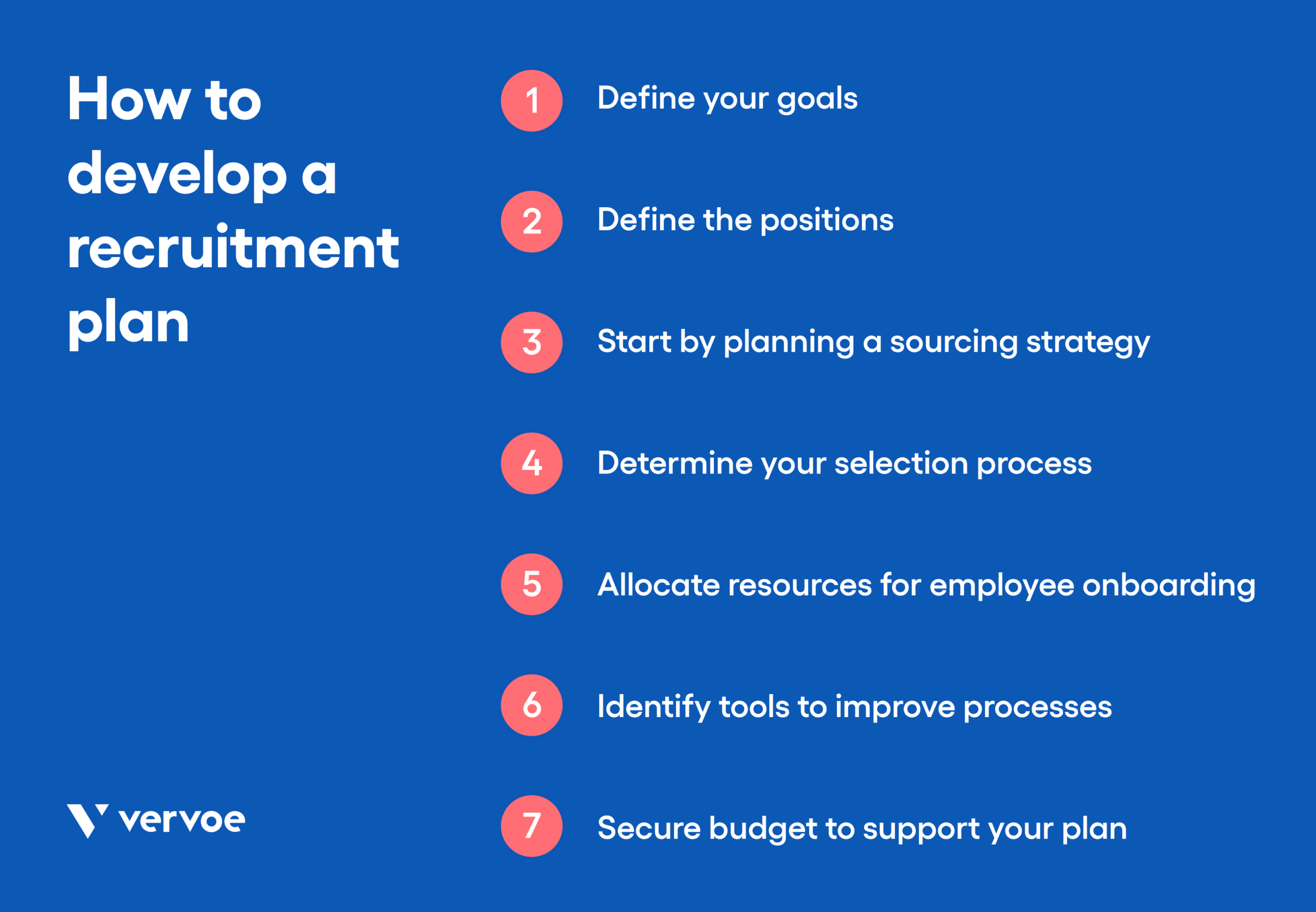
Source by vervoe.com
Building a 2025 Recruitment Plan: 6-Step Framework
1. Workforce Mapping
- Audit existing skills against 2025 project pipelines using tools like SAP SuccessFactors.
- Identify gaps: 56% of Middle Eastern firms lack AI/ML capabilities despite 2030 digitalization goals.
2. Localized Sourcing Channels
Platform
Best For
Avg. Hire Time
Bayt.com
GCC nationals & Arabic speakers
22 days
LinkedIn MENA
Tech & finance expats
18 days
GulfTalent
Engineering & healthcare
27 days
3. Nationalization Compliance
- Partner with Nafis (UAE) and Saudization portals to pre-screen citizens.
- Allocate 15% of training budgets to upskilling nationals for leadership roles.
4. AI-Driven Screening
Deploy tools to:
- Reduce bias in 89% of cases via blind resume reviews
- Cut screening time by 47% through automated coding assessments
5. Relocation Packages
Top incentives for internationalhires:
- 100% visa sponsorship (83% acceptance boost)
- Tax-free salary tiers above $85,000
- Schooling allowances ($15,000 avg.)
6. Retention Roadmap
- Conduct quarterly “stay interviews” to address turnover triggers
- Offer Sharia-compliant pension plans and Ramadan-adjusted KPIs
How to Test Your Recruitment Plan
Validate effectiveness through:
A. Pilot Programs
Run 3-month trials for high-priority roles (e.g., data scientists), tracking:
- Offer acceptance rates (target >75%)
- Onboarding satisfaction scores (benchmark: 4.2/5)
B. Compliance Audits
Use local legal firms to review:
- Emiratization quota adherence
- Labor contract alignment with Federal Decree-Law No. 33
C. Cost-Benefit Analysis
Calculate ROI using:
(Total Hire Value - Recruitment Spend) / Time to Productivity
Aim for $3.50 return per $1 spent on recruitment tech.
Partnering with Overseas Recruitment Firms in Pakistan
Pakistan’s $8 billion IT exportsector offers Middle Eastern firms:
- Cost Efficiency: 42% lower salaries than GCC averages
- Skill Match: 75,000 annual STEM graduates fluent in Arabic/English
- Time Zone Advantage: 1-hour overlap with UAE/KSA
When selecting a Pakistani partner:
- Verify PEOP licensing and ISO certification
- Demand Middle East-specific case studies (e.g., NEOM hiring drives)
- Insist on Arabic proficiency tests for shortlisted candidates
DITRC: Your Strategic Recruitment Partner in Pakistan
As Pakistan’s first MENA-focusedagency, DITRC delivers:
- Pre-Vetted Talent: 48-hour shortlisting for roles like:
- DevOps Engineers ($4,200/month avg.)
- BIM Managers ($5,800/month avg.)
- Compliance Assurance:
- Labor contract alignment with GCC standards
- Muqabala (Islamic employment bond) options
- Post-Hire Support:
- 90-day acclimation programs covering GCC labor laws
- Tax filing assistance for expats
Final Thoughts
By 2025, Middle Eastern companiesthat blend AI efficiency with cultural intelligence will secure 70% of top-tiertalent. Start by auditing current gaps, pilot localized-tech hybrids, and forgecross-border partnerships. Remember: In Dubai’s 2040 Urban Plan alone, 200,000new jobs await those with the right recruitment blueprint.


.webp)